8F Gilbert Place, London WC1A 2JD
Holborn / Bloomsbury, Camden
Menu
Book Online
The alveolar process or alveolar bone is the thickened ridge of bone that contains the tooth sockets on the jaw bones (in humans, the maxilla and the mandible). The structures are covered by gums as part of the oral cavity. The synonymous terms alveolar ridge and alveolar margin are also sometimes used more specifically to refer to the ridges on the inside of the mouth which can be felt with the tongue, either on roof of the mouth between the upper teeth and the hard palate or on the bottom of the mouth behind the lower teeth.
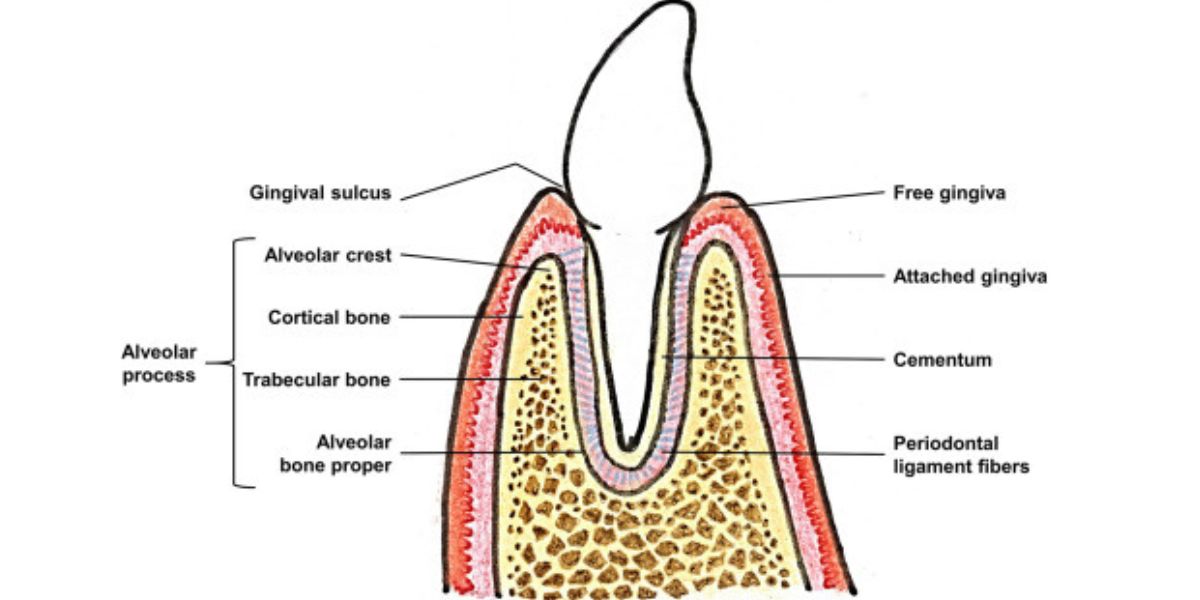
The alveolar ridge plays a central role in supporting the teeth and maintaining the structural integrity of the jaw. The bone tissue that forms the ridge is in a constant state of remodelling — it is preserved and stimulated by the forces transmitted through the tooth roots during biting and chewing. When a tooth is lost, this stimulation ceases, and the alveolar bone begins to resorb, or shrink, in a process that can significantly alter the shape of the jaw over time. This bone loss can affect the fit of dentures, the feasibility of dental implants, and even the overall appearance of the lower face.
Ridge resorption is one of the most clinically significant consequences of tooth loss. It progresses most rapidly in the first year after an extraction and continues gradually throughout life if the gap is left untreated. The width and height of the ridge diminish, which can complicate tooth replacement options. In some cases, the bone loss is severe enough that it needs to be addressed before further treatment can proceed.
Modern dentistry offers several approaches to preserve or rebuild the alveolar ridge. Following a tooth extraction, socket preservation techniques — involving the placement of bone grafting material into the empty socket — can help maintain ridge volume and reduce future resorption. In cases where significant bone loss has already occurred, more extensive bone grafting procedures can rebuild the ridge to a level sufficient to support implants. A sinus lift may also be required when bone height in the upper jaw is insufficient due to proximity to the sinus cavity.
Because the alveolar ridge forms the foundation for all tooth replacement options, its condition directly influences which treatments are suitable. Dental implants are the gold standard for replacing missing teeth, as they are anchored directly into the alveolar bone and replicate the stimulation of a natural root, slowing further bone loss. Where multiple or all teeth are missing, All-on-4 dental implants or implant-supported dentures can restore function while helping to preserve remaining bone. Conventional dentures and dental bridges are also available depending on the degree of ridge resorption and individual patient needs.
If you have recently had a tooth extracted, are experiencing ill-fitting dentures, or are considering implant treatment, an assessment of the alveolar ridge is an essential first step. At Forest & Ray, we provide dental X-rays and thorough dental consultations to evaluate bone structure and determine the most appropriate course of treatment.
Forest & Ray is a private dentist in London (Holborn, Camden) offering a wide range of treatments (basically everything), same-day appointments 7 days a week and affordable prices. The key behind a beautiful smile is self confidence, and success. At Forest & Ray we ensure to help you to the best of our ability. If you place your trust in us, we will make sure you achieve your goals and maintain oral hygiene to the maximum of its capacity. Regardless of any age or condition, we promise painless treatments and a professional team.